
On Friday, July 10, 2026
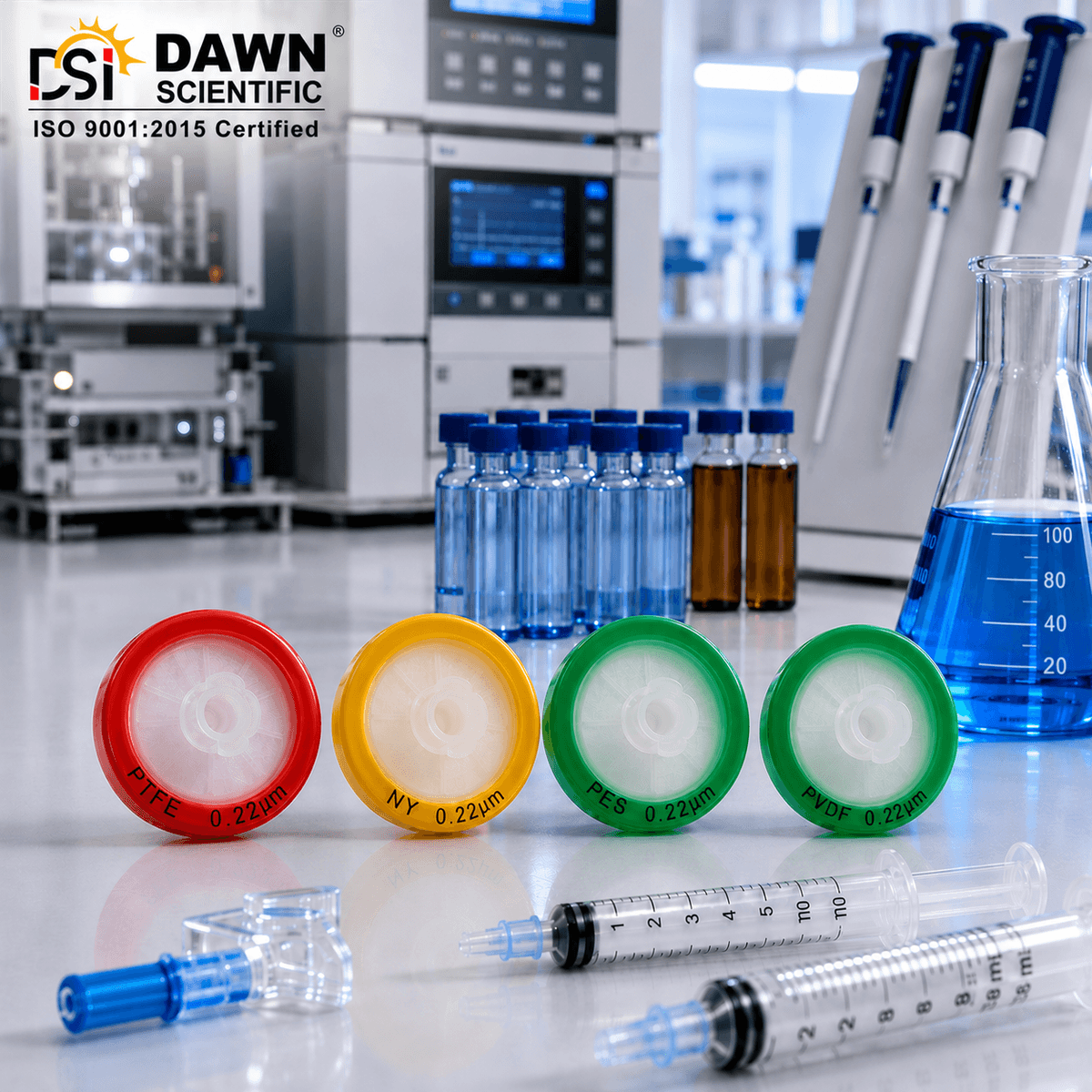
Syringe filters play an important role in sample integrity and reproducibility in analytical and research laboratories. Laboratory syringe filters can be used to remove particulates and contaminants efficiently before instrumental analysis hence preserving the analytical systems and enhancing the accuracy of the data.
Syringe filters are used as a reliable and standardized method of small-volume filtration in workflows involving Membrane filters, chromatography or sample preparation.
Syringe filters are single-use filtration tools that are meant to clarify and purify the liquid samples. These are engineered with high performance Membrane filters sealed in chemically compatible housings that can be attached directly to regular syringes.
Being Disposable syringe filters, they find extensive use to reduce risks of cross-contamination and ensure consistency in filtration operation in the different analytical processes.
It is imperative to have a clear insight into the difference between membrane filters and syringe filters to choose the right method of filtration.
Membrane filters are flat filtration media generally applied in vacuum or pressure-driven assemblies to do bulk processing.
Syringe filters are integrated, ready-to-use units designed for rapid filtration of small sample volumes.
Under common routinely analytical use conditions, Laboratory syringe filters have enhanced operating efficiency and less handling complexity.
The sterile filters are designed to have a particular pore structure to attain microbial retention. They are generally used in:
Pharmaceutical preparations.
Microbiological and cell culture.
The choice of the membrane material depends on the chemical compatibility and the sample properties:
PTFE syringe filters - Can be used with aggressive solvents and non-aqueous samples.
Nylon syringe filters - - These are applicable in general-purpose filtration.
PES syringe filters- Filters designed to use high throughput in aqueous solutions.
PVDF syringe filters: These are the ones that are used when low protein-binding is required.
The choice of Syringe filter pore size has the direct effect on the efficiency of filtration:
• 0.22 µm -Applied in sterile filters to eliminate microbes.
• 0.45 µm - The particulate elimination and clarification use.
Such applications as 0.22 micron sterile syringe filters used in laboratories need to be used with care in terms of pore size selection to assure reproducibility.
Applications of syringe filters are:
• Sample preparation For chromatographic analysis.
• Pharmaceutical and biotechnology processing.
• Environmental and water analysis.
• Quality control of food and beverages.
• High purity and microelectronics.
They specifically come in handy when operating a workflow, like the best syringe filters to use when preparing samples in HPLC, where the removal of the particulate matter is a crucial factor.
It is important to know How to use a syringe filter so that it works optimally:
Take out the sample using a syringe.
Firmly attach the syringe filter.
Filter the sample using uniform pressure.
Take filtrate in a clean container.
Dispose after single use
Contamination and inconsistency of results are avoided by using Disposable syringe filters.
To the people who are in need of the where to get syringe filter in the USA, it is necessary to acquire a supplier who will provide consistency in quality and performance.
At Dawn Scientific, we have all types of Laboratory syringe filters that are used to suit the needs of analytical, pharmaceutical, and industrial laboratories.
Modern laboratory filtration can only be done through syringe filters which ensure proper preparation of the sample and prevent damage to the instruments of analysis. They are used in best syringe filters in HPLC sample preparation and environmental analysis applications, among others, through Membrane filters through to the high-performance Sterile filters.
The choice of the correct Laboratory syringe filters such as PTFE syringe filters, Nylon syringe filters, PES syringe filters and PVDF syringe filters is very important to attain reliable results.
Disclaimer: All the information on this blog is published in good faith and for general information purposes only. The information contained in this blog might be provided on an “as is” based on Wikipedia, Google, and other scientific articles. We are not liable for any injuries or damages for the use of the information. Please do your research before you use this information for any purpose.