On Saturday, August 23, 2025
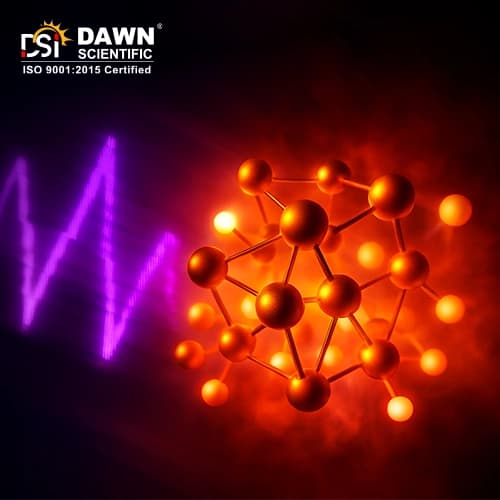
In a first of its kind, researchers at the U.S. Department of Energy’s SLAC National Accelerator Laboratory have made solid gold hydride, a binary compound composed of only gold and hydrogen atoms. This surprise result was the result of an experiment designed to study diamond formation in hydrocarbons under high temperature and pressure, using powerful X-ray bursts at the European XFEL in Germany.
A thin gold foil, originally incorporated as an X-ray absorber, interacted with super-dense hydrogen in a way not anticipated to form gold hydride. This reaction defied the convention of chemistry because gold is typically chemically inert. When hydrogen atoms became superionic at ultrahigh temperatures (above 3,500 °F) and pressures greater than those of Earth’s mantle, they flowed freely through gold’s rigid atomic lattice and significantly enhanced its conductivity.
These findings not only invalidate the outdated assumptions about the reactivity of gold, but also open up new research directions for dense hydrogen—a prevalent ingredient in planetary interiors and nuclear fusion. Scientists hope this breakthrough can give us valuable insights into stellar fusion processes and potentially aid the creation of future energy technologies on Earth one day.
According to lead author Mungo Frost, “These results suggest there’s potentially a lot of new chemistry to be discovered at extreme conditions.” The research appears in Angewandte Chemie International Edition and represents a significant advance in high-pressure chemistry and materials science.
At Dawn Scientific we strive to be at the cutting edge of such groundbreaking scientific breakthroughs. We are a reliable provider of high-purity chemicals, laboratory reagents, and innovative scientific solutions and serve and empower researchers in the USA. Breakthroughs such as gold hydride reinforce the significance of fine-quality materials and accurate lab equipment—something Dawn Scientific takes pride in providing to research labs, institutions, and innovators shaping the chemistry of the future.
Disclaimer: All the information on this news is published in good faith and for general information purposes only. The information contained in this news might be provided on an “as is” based on Wikipedia, Google, and other scientific articles. We are not liable for any injuries or damages for the use of the information. Please do your own research before you use this information for any purpose.