On Saturday, April 25, 2026
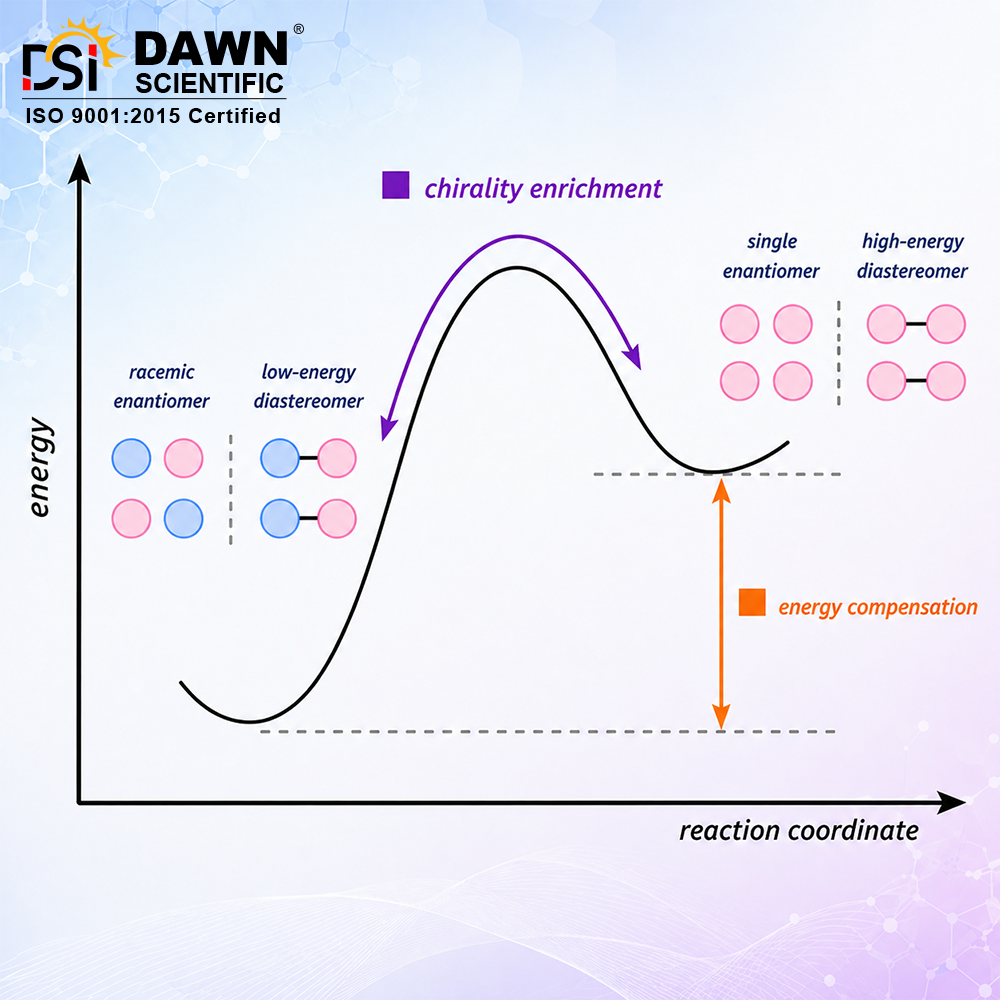
The chemists are redefining their molecular design through the use of light, enzymes and mechanical force to alter the three-dimensional structure of a molecule without having to rebuild the molecule. This novel method is called contra-thermodynamic stereochemical editing and enables one to access more energetically demanding stereoisomers which are complex to prepare by other methods.
In the United States, Alison Wendlandt, an organic chemist at the Massachusetts Institute of Technology, is also working on these techniques, especially by photocatalyst-based processes where light is used to promote higher-energy stereochemical reactions.
Stereochemistry historically becomes fixed in the process of bond formation, and can be intricate and expensive to produce. A more lenient approach is stereochemical editing, which allows one to edit stereocenters late in the synthesis, to invert configurations or to convert one stereoisomer into another. This increases synthetic opportunities and facilitates routes to preferred enantiomers.
These reactions can be kinetically controlled, forming products of higher energy or more anti-thermodynamic than the most stable forms. The transformation of a racemic mixture to a single enantiomer or epimerization may produce more unstable yet valuable compounds.
Scientists are employing photocatalysts to employ light to energize molecules, breaking down bonds and allowing stereochemical inversion. Enzymes offer selective conversions based on their chirality, whereas transition metal catalysts and mechanical methods, e.g., grinding with glass beads, aid in catalyzing enantiomeric conversion.
The breakthrough allows the rapid generation of a wide range of molecular libraries with subtle 3D changes, which is important in pharmaceutical development, where molecular shape is the determinant of biological activity.
At Dawn Scientific , , we support innovations that influence analytical chemistry, clean energy, and industrial research. We have a range of high-quality lab reagents, consumables, and equipment to serve scientists and organizations that are engaged in the development of advanced technologies such as hydrogen production and sustainable energy systems. Keep in touch with Dawn Scientific News to know more about the recent developments in the world of science and laboratory.
Disclaimer:All the information on this news is published in good faith and for general information purposes only. The information contained in this news might be provided on an “as is” based on Wikipedia, Google, and other scientific articles. We are not liable for any injuries or damages for the use of the information. Please do your own research before you use this information for any purpose.