On Friday, March 20, 2026
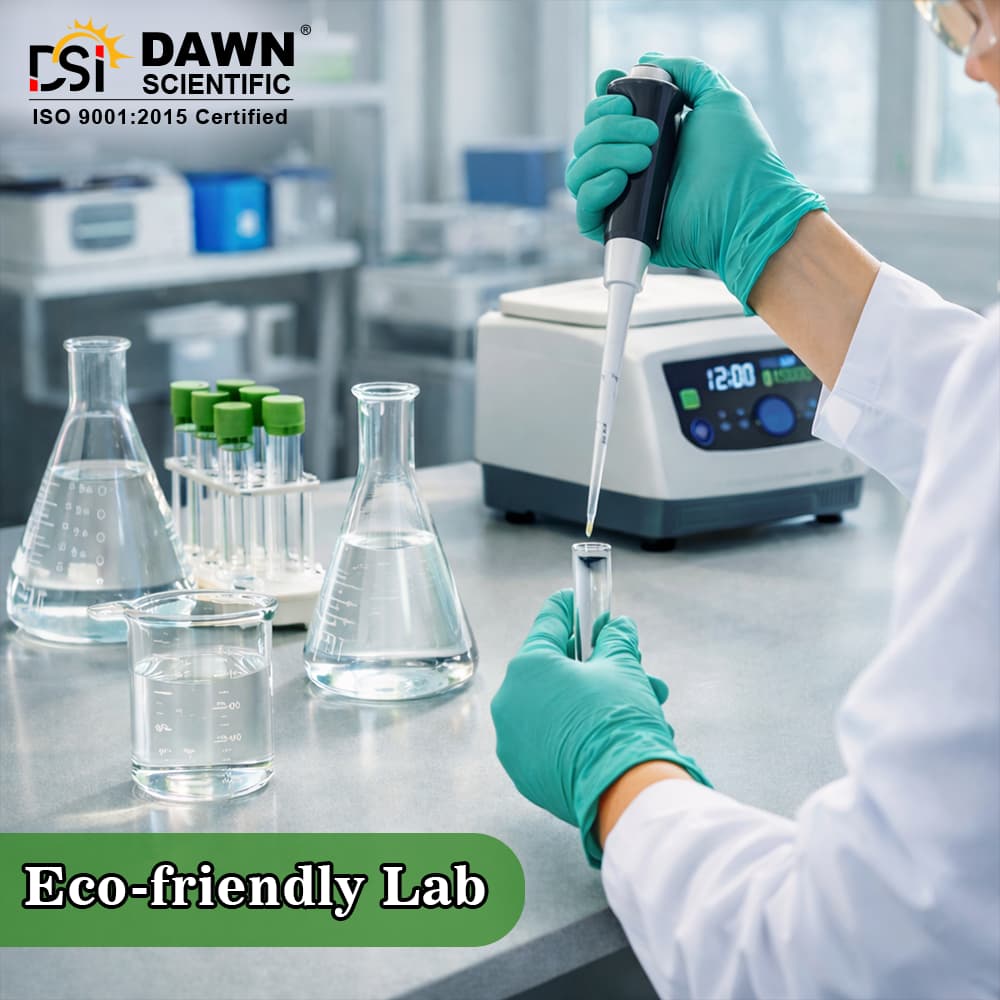
Laboratories are a very important part of scientific innovation, yet they are also one of the greatest energy consumers, as well as waste producers. Making an eco-friendly lab is no longer a choice for the environment; it is increasingly becoming an operational requirement for research institutions, healthcare laboratories, and industrial labs in the United States.
Sustainable laboratory practices enable the laboratories to minimize their environmental impact, increase efficiency, and decrease the cost of operations. The green lab aims at minimizing waste, saving energy, and employing responsible buying practices.
This is a guide on how to make your lab eco-friendly and what sustainable changes can be made to make sense.
Waste management is one of the most significant issues of lab sustainability. Laboratories produce huge quantities of plastic waste and chemical containers, in addition to disposable supplies. To improve the sustainability of laboratory facilities, it is necessary to know how to decrease waste.
Practical solutions to waste minimization in the laboratory setting would involve:
These are basic modifications that aid in the making of an environmentally friendly laboratory and minimize the cost of disposal.
The other important aspect of laboratory sustainability in the USA is energy conservation. Some of the laboratory equipment, like freezers, fume hood and incubators, are energy-consuming devices that are used in large amounts on a daily basis.
The following considerations can be made to create an energy-efficient lab:
These green lab practices reduce the level of electricity and operating costs.
When choosing the products that are sustainable, it is crucial to consider a sustainable lab. A lot of manufacturers in the USA now offer green alternatives.
Best practices include:
Buy long-lasting and reusable laboratory equipment.
Select recyclable or biodegradable products.
Contract with suppliers of eco-friendly lab supplies in the USA.
Choose quality reagents to minimize duplicate tests..
The decisions help with lab practices that are sustainable long-term and enhance efficiency.
Effective green lab practices involve the involvement of the whole team. Educating the personnel about sustainability assists in having sustainable outcomes.
Measures to enhance the lab sustainability include:
The establishment of awareness is one way of ensuring an eco-friendly lab environment.
The advantages of eco-friendly lab practices are very numerous and are of great significance to the laboratories in the United States.
Key benefits include:
Implementation of sustainable lab practices in research laboratories enhances the overall productivity, too.
Building an eco-friendly lab is a necessity for contemporary laboratories that are devoted to environmental security and the efficiency of their functioning. Laboratories can greatly mitigate the negative effect on the environment by knowing how to make their labs eco-friendly, enhance energy efficiency, and implement sustainable lab practices.
Understanding how to reduce waste in laboratory facilities and investing in eco-friendly lab supplies help create a safer, more efficient, and environmentally friendly lab.
At Dawn Scientific, we support laboratories across the USA and supply them with high-quality products that will help to enhance the lab sustainability and make its operations long-term sustainable.
An eco-friendly laboratory applies Sustainable lab practices to minimize waste, conserve energy, and protect the environment.
Making your lab environment friendly can be achieved through waste reduction, the use of energy-efficient equipment, and the selection of lab supplies that are friendly.
Use reusable laboratory materials, recycle, and buy in large quantities.
Such practices comprise minimization of waste, energy conservation, and responsible buying.
This has advantages such as reduced costs, efficiency, and decreased environmental impact.
Disclaimer: All the information on this blog is published in good faith and for general information purposes only. The information contained in this blog might be provided on an “as is” based on Wikipedia, Google, and other scientific articles. We are not liable for any injuries or damages for the use of the information. Please do your research before you use this information for any purpose.