
On Friday, August 21, 2026
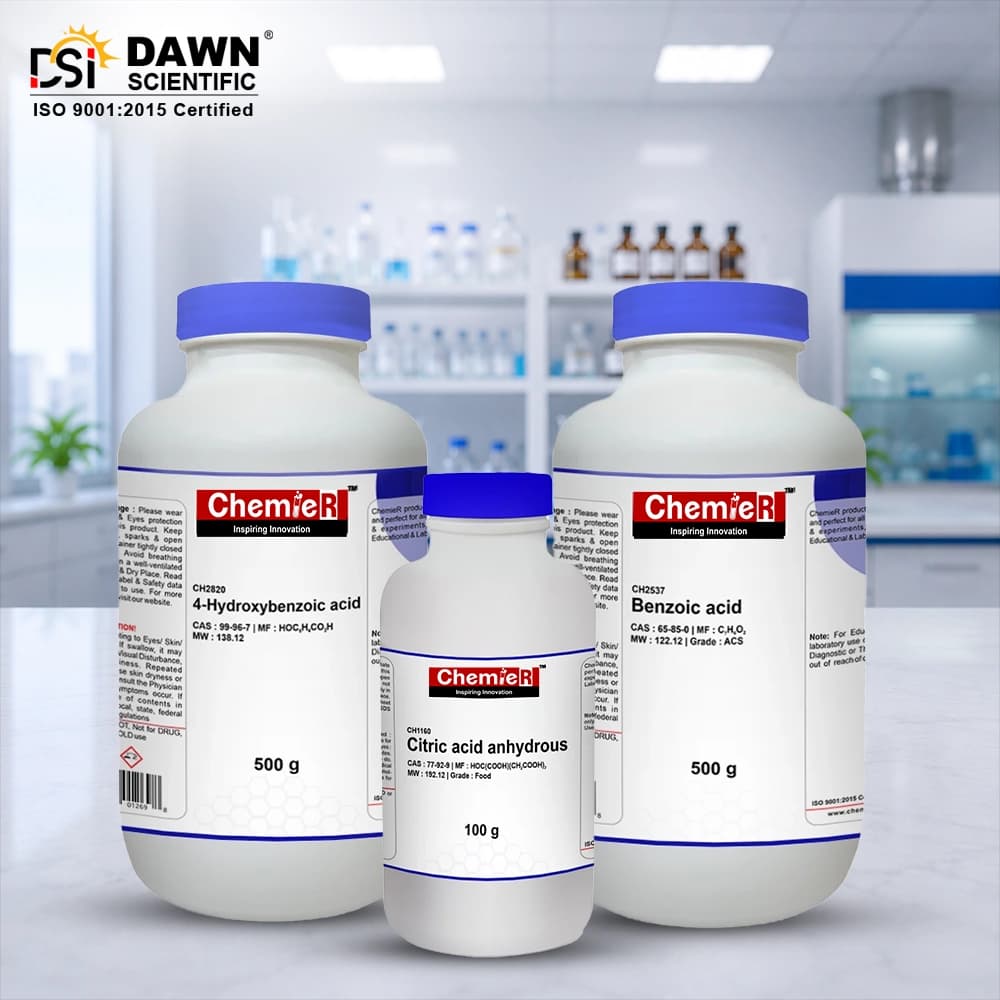
Organic reagents are vital for the modern laboratory, facilitating everything from chemical synthesis and analytical testing to pharmaceutical research and academic experimentation. Whether you work in a research laboratory, educational establishment, biotechnology laboratory or quality control laboratory, choosing the right reagents is key to obtaining accurate, repeatable results.
This guide will look at the various types of organic reagents, their applications, where to buy organic reagents, and their role in scientific research in different industries.
Organic Reagents are compounds of carbon used in laboratory analysis and to assist, promote or carry out a chemical reaction. The compounds are used extensively in organic chemistry, analytical chemistry, pharmaceutical, biotechnology, environmental testing, and industrial research.
Researchers can choose the appropriate chemicals for use in their research by understanding the types of organic reagents used in laboratories.
There are several types of organic reagents used in laboratories:
Used to dissolve, dilute, and extract substances during laboratory procedures. They are essential for sample preparation, purification, and chemical reactions.
Help control pH levels and reaction conditions to ensure efficient, accurate experimental outcomes.
Used to create, modify, and transform chemical compounds during research and product development.
Support the identification, measurement, and analysis of substances in laboratory testing and quality control.
Specialty reagents are tailored for specific use in the laboratory, e.g., biotechnology, molecular biology, and pharmaceutical development.
They are often used in high purity and must meet exacting chemical and compositional specifications for advanced research projects.
One of the most important applications is for chemical synthesis is the creation of new molecules and chemical compounds.
The reagents are used for research in the following ways:
Pharmaceutical scientists use Laboratory-grade reagents extensively for discovery and development of Pharmaceuticals. The quality of reagents can have a significant impact on the outcome of the reaction, so it is important to use high-quality reagents for successful synthesis.
Analytical chemistry uses common organic reagents to determine the composition, concentration, and properties of chemical samples.
Some of the common are:
Organic reagents are used in high purity, which helps to minimize the interference of contaminants and increase the accuracy of analytical reagents.
Organic laboratory reagents for research use aid in a variety of scientific fields.
Organic reagents are used by researchers to synthesize active pharmaceutical ingredients (APIs), study pharmaceutical interactions, and develop new treatments.
Organic compounds are applied in cell culture, protein purification and molecular biology experiments.
Universities use organic compounds for laboratory training and scientific research.
Various organic reagents are used to analyze soil, water and air samples in the laboratory to check environmental quality and regulatory compliance.
Organic reagents are used by manufacturers for new product development, process development, and quality control testing.
How organic reagents are used in chemistry laboratories is one of the most common questions in laboratories. They have uses in almost all branches of laboratory science.
Used to:
Laboratory-grade reagents are used in important laboratory processes, so reliable Laboratory-grade reagents are crucial to getting consistent, repeatable results.
The quality of reagents not only affects experimental success but also the quality of the results. There are many advantages of high-purity organic reagents :
High-purity organic reagents are particularly important in pharmaceutical and biotechnology labs, and analytical labs where accuracy is critical.
When you are looking for Where to buy organic reagents , it is important to buy quality products, detailed specifications, and quality customer service from a reputable supplier. Reputable suppliers such as Dawn Scientific supply reagents for laboratories, industrial use in research, analytical testing, education labs and industrial applications in the laboratory. When purchasing a product, it is important to consider the purity of the product, the quality assurance measures used, packaging options, technical documentation, and availability. Partnering with a longstanding supplier guarantees uniformity in the product and stable lab results.
Organic Reagents are essential to modern science and laboratory work. These versatile compounds find use in various industries, including Organic synthesis, analytical testing, pharmaceutical research and development, and environmental monitoring.
Research outcomes and the accuracy of experiments can be enhanced with a proper knowledge of the types of organic reagents , selection of high-purity organic reagents and sourcing reliable reagents for labs. Quality reagents and proper reagent handling procedures can provide reliable, repeatable, and scientifically valid results in the laboratory.
In the pharmaceutical industry, biotechnology, chemical research, environmental testing and academic research laboratories, an increasing number of reagents are used.
It will depend on the application, the required purity, the compatibility with other chemicals, the storage requirements and the specific reaction or analysis.
Storage conditions depend on the chemical, but for most organic chemicals, the storage conditions include storing them in tightly sealed containers away from direct sunlight, heat sources and incompatible chemical reagents. Follow the manufacturer’s storage instructions.
Laboratory-grade organic reagents are available from reputable chemical products suppliers. For example, quality-tested reagents with technical documentation are available from Dawn Scientific.
Disclaimer: All the information on this blog is published in good faith and for general information purposes only. The information contained in this blog might be provided on an “as is” based on Wikipedia, Google, and other scientific articles. We are not liable for any injuries or damages for the use of the information. Please do your own research before you use this information for any purpose.