On Saturday, May 9, 2026
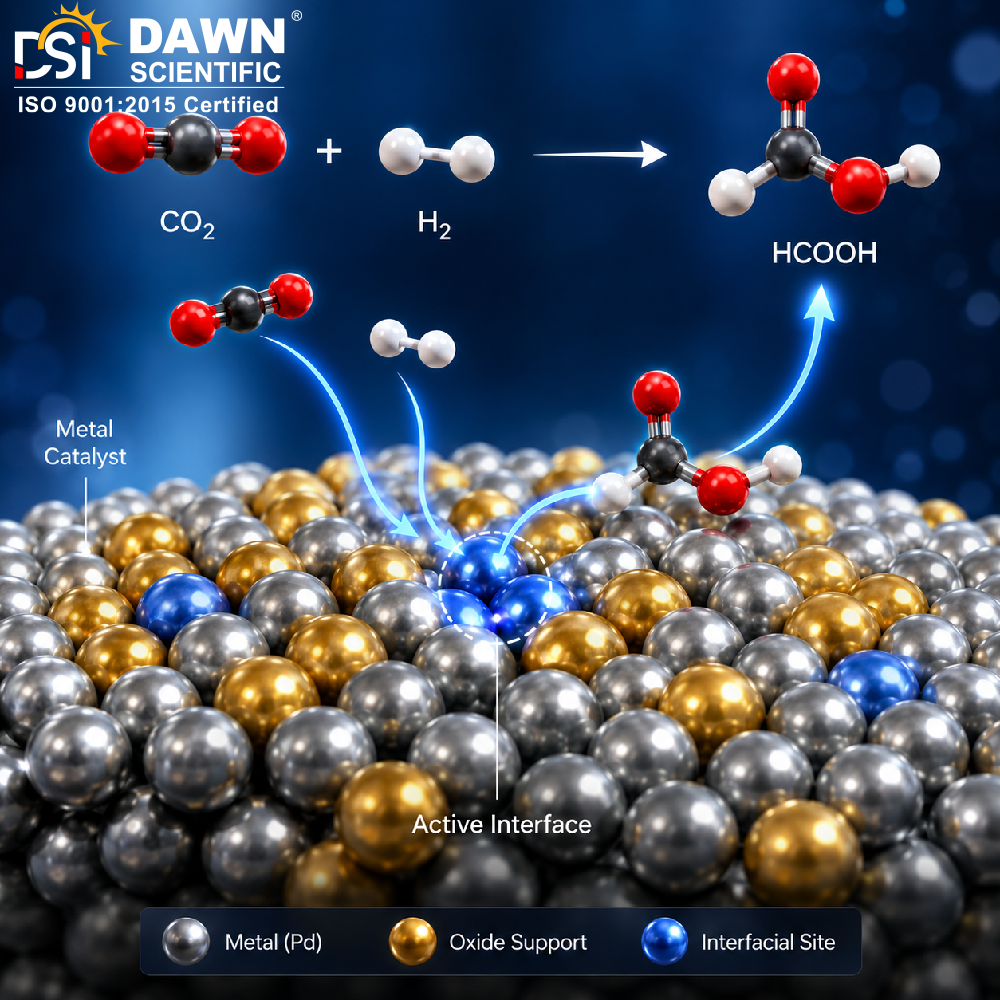
A new catalytic system has been designed that would significantly enhance the electrochemical conversion of carbon dioxide (CO₂) to formic acid, a key industrial chemical and potential liquid hydrogen carrier. The study shows innovative ways of improving the efficiency and selectivity of electroreduction processes of CO₂ using dynamic interfaces with catalysts.
Prof. Chih-Jung Chen from National Taiwan University and Prof. Weixin Huang from the University of North Dakota have developed a palladium-supported indium oxide catalyst (Pd/In₂O₃) in a recent study published in ACS Catalysis. When the reaction was performed with CO₂ and the catalyst alone, indium oxide alone showed significantly less performance in the conversion of CO₂ to formic acid.
With an operating potential of −1.1 V vs RHE, the catalyst could boost the Faradaic efficiency of formic acid production from close to 30% to 48%, with formic acid partial current density nearly doubling. It was found that during the reaction, the catalyst dynamically forms Pd–In alloy sites, which results in the formation of more active sites for formic acid formation.
These results reveal the potential of designing a catalyzing system that is evolvable under operating conditions, thus unlocking new opportunities for sustainable CO₂ utilization and value-added chemical production techniques.
Dawn Scientific, promotes innovation in science with high-quality laboratory chemicals, analytical reagents, and research materials needed for advanced laboratory and industrial applications. Developments like these emphasize the growing importance of reliable materials in enabling efficient and sustainable chemical synthesis.
Disclaimer:All the information on this news is published in good faith and for general information purposes only. The information contained in this news might be provided on an “as is” based on Wikipedia, Google, and other scientific articles. We are not liable for any injuries or damages for the use of the information. Please do your own research before you use this information for any purpose.