On Saturday, January 10, 2026
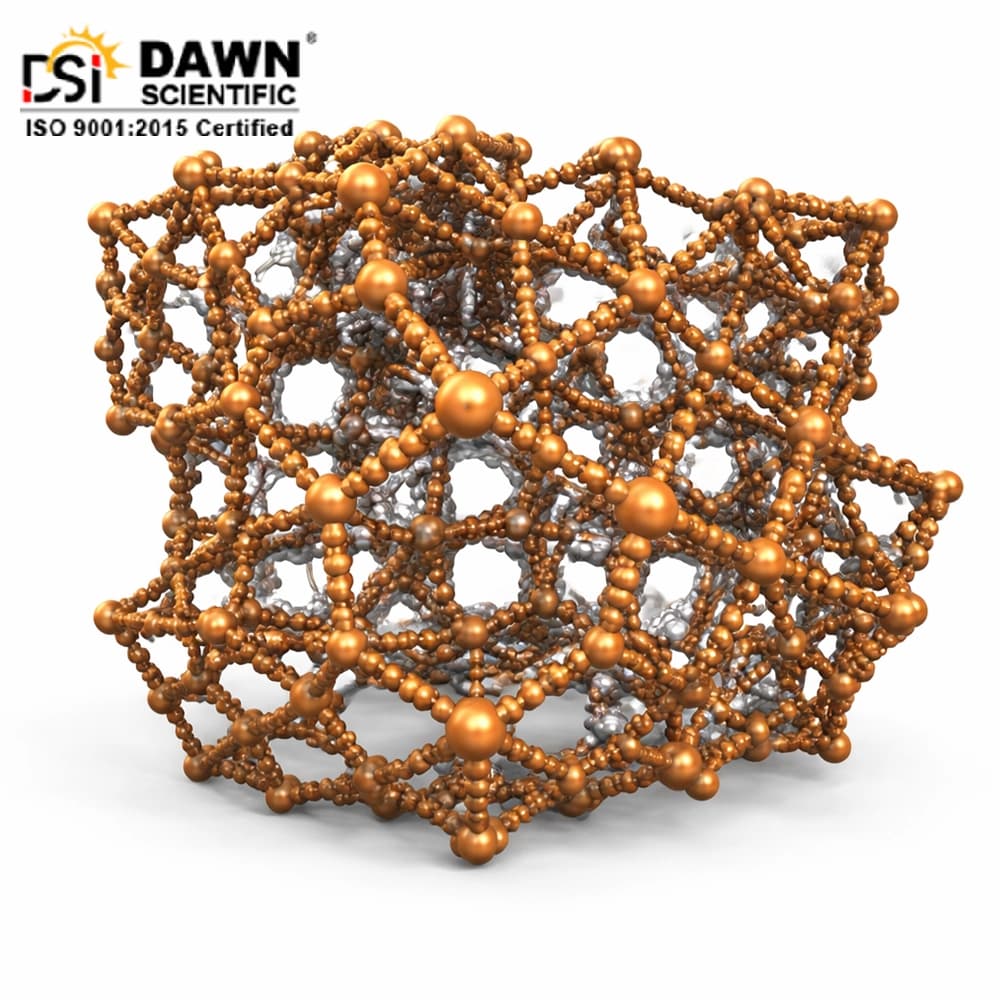
A new machine-learning-based discovery tool studied by Princeton University researchers has made the discovery of metal-organic frameworks (MOFs) much faster, as this family of porous materials can be applied in carbon capture, energy storage, catalysis, and clean water technologies. Adji Bousso Dieng, an assistant professor of computer science at Princeton, conducted the study and published it in the Journal of the American Chemical Society.
MOFs consist of metal ion nodes and organic linkers, and the combinations of these are trillions. Nevertheless, not all of these structures can be synthesized easily or with high stability, and thus the conventional trial and error procedures are time-consuming and inefficient. This is met in the new tool, which employs machine learning to predict the free energy of MOFs, one of the important indicator of the stability and synthesizability of such molecules.
Unlike conventional molecular simulations that can take hours or days, the new model generates predictions in seconds. By converting the physical and chemical characteristics of MOFs into machine-readable sequences, the researchers trained a custom language model using a database of one million MOFs. When tested against approximately 65,000 known structures, the model achieved 97% predictive accuracy.
Previous research established that MOFs with free energy values below 4.4 kilojoules per mole are stable and feasible to synthesize, enabling the tool to quickly identify viable candidates. The team is now refining the model further and adding search functionality to help researchers efficiently target stable, high-performance MOFs for real-world applications.
Dawn Scientific provides laboratory chemicals, laboratory reagents, and laboratory consumables of high quality that facilitate high-technology research and material science. Dawn Scientific supports the accurate, reproducible results in both academic, industrial, and analytical applications of laboratories with a commitment to quality, consistency, and reliable performance.
Disclaimer: All the information on this news is published in good faith and for general information purposes only. The information contained in this news might be provided on an “as is” based on Wikipedia, Google, and other scientific articles. We are not liable for any injuries or damages for the use of the information. Please do your own research before you use this information for any purpose.