On
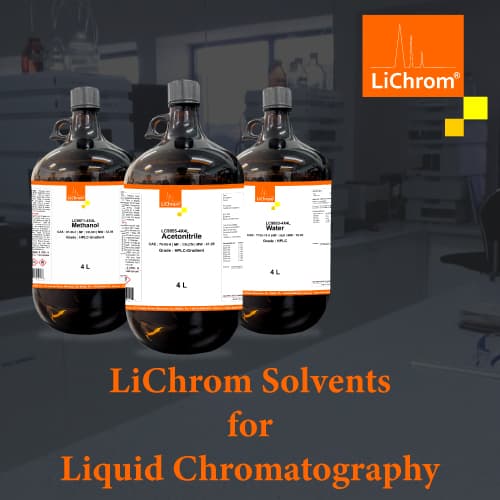
HPLC is a technique that separates components in a liquid mixture. A sample is introduced into a solvent stream that moves through a column filled with a separation medium. The components separate based on their migration rates as they travel through the column. Detectors produce a voltage signal over time, creating a chromatogram. The emergence time of each peak identifies the sample component, while the peak area indicates its quantity.
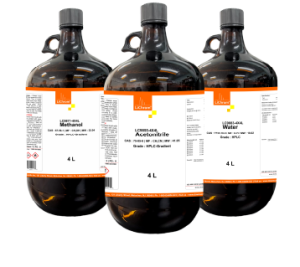
Dawn Scientific offers premium HPLC solvents under the well-known "LiChrom" brand, specifically designed for analyzing a wide range of products on various High-Performance Liquid Chromatography systems. The "LiChrom" brand is renowned for its innovation and ability to meet the strict requirements of HPLC analysis, compatible with major instrument manufacturers such as Agilent Technologies, Shimadzu, Thermo Fisher Scientific, and others.
LiChrom provides a comprehensive selection of high-quality HPLC solvents to maintain the HPLC system and prevent contamination, ensuring accurate and consistent results. The LiChrom brand offers a variety of HPLC solvents, including Acetone, Acetonitrile, Chloroform, Ethyl Acetate, n-Hexane, and more. Additionally, LiChrom offers ultra-pure Water for HPLC grade to meet all LC needs.
LiChrom HPLC solvents undergo rigorous testing and strict quality control measures to meet the high standards required for successful HPLC separations, including high purity, minimal UV-absorbance, confirmed compatibility for fluorescence detection, low particulate levels (eliminating pre-filtration), and controlled low levels of non-volatile components. To achieve precise and consistent results in HPLC, it is essential to use high-quality solvents and properly maintain the HPLC system to prevent contamination or changes in solvent composition. Proper storage and handling of HPLC solvents are also crucial to preserve their purity and prevent degradation over time.
The use of HPLC solvents is crucial for achieving accurate and reliable results in High-Performance Liquid Chromatography. These solvents play a vital role in separating, identifying, and measuring substances in complex mixtures, and are essential for the success of various scientific and industrial applications, including pharmaceuticals, environmental analysis, and food and beverage testing. Water, methanol, and Acetonitrile are commonly used solvents in HPLC.
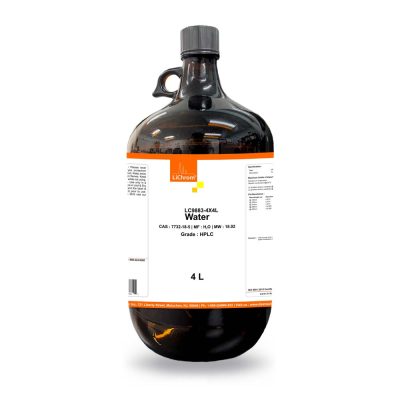
Water for HPLC with the chemical formula H2O, is a polar inorganic substance. It is a clear, colorless, tasteless and odorless liquid. HPLC grade water is ultra-pure, with minimal UV absorbance. They are filtered through a 0.2-micron filter. It is purified through methods such as UV irradiation, filtration, distillation, ion-exchange, and reverse osmosis. The quality is assessed based on absorbance values, specific resistance, and the presence of total organic compounds.
Water is the most commonly used solvent in HPLC and is effective in analyzing hydrophilic compounds. In HPLC analysis, HPLC water is used to identify compounds at extremely low concentrations. It is used in sample preparation and as the mobile phase. HPLC water is frequently used in industries such as industrial chemicals, nutraceuticals, food, forensic science, environmental studies, and pharmaceuticals.
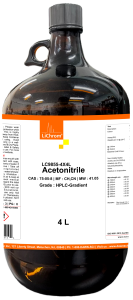
Acetonitrile HPLC grade is a clear colorless liquid with a mild, sweet smell and can mix easily with water and most organic solvents, excluding alkanes. Acetonitrile's popularity in HPLC is attributed to its high polarity and minimal UV absorbance in the UV range, reducing interference with detection.
Acetonitrile (CH₃CN) is a widely used organic nitrile compound in HPLC. Acetonitrile HPLC is commonly used for various analytes and is a popular choice for reverse-phase chromatography. Acetonitrile's exceptional separation abilities are utilized in various fields such as pharmaceuticals, food analysis, environmental analysis, natural products, and forensic science.
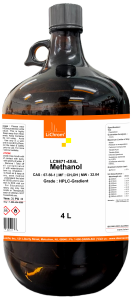
Methanol HPLC grade, also known as methyl alcohol, is a polar protic solvent widely used in HPLC. It is a clear, colorless, flammable liquid with a distinct alcoholic odor.
Methanol's high UV absorbance makes it ideal for ultraviolet detection and separating non-polar compounds. It is commonly used in HPLC, UHPLC, and LC-MS for chromatographic techniques. Methanol is versatile, serving as a solvent in recrystallization and aiding in compound extraction and purification. It is used in reverse-phase HPLC to separate polar compounds like amino acids and peptides, as well as in normal-phase HPLC to separate non-polar compounds. Methanol is often combined with other solvents, such as water or acetonitrile, to create a binary or ternary mobile phase in HPLC.
LiChrom brands meet the highest quality standards. LiChrom brand was founded with the vision of providing analyst, chemist, and all life science professionals with the best products available in the market.
If you are looking for consistent, reproducible, and dependable results then choose high-quality products from well recognized brands like "LiChrom". LiChrom is exclusively distributed by Dawn Scientific Inc. LiChrom can be purchased online from www.dawnscientific.com or www.lichrom.com.
Disclaimer: All the information on this blog is published in good faith and for general information purpose only. The information contained in this Blog might be provided on an “as is” based on Wikipedia, Google and other scientific articles. We are not liable for any injuries or damages for the use of your information. Please do your own research before you use this information for any purpose.