On Friday, November 28, 2025
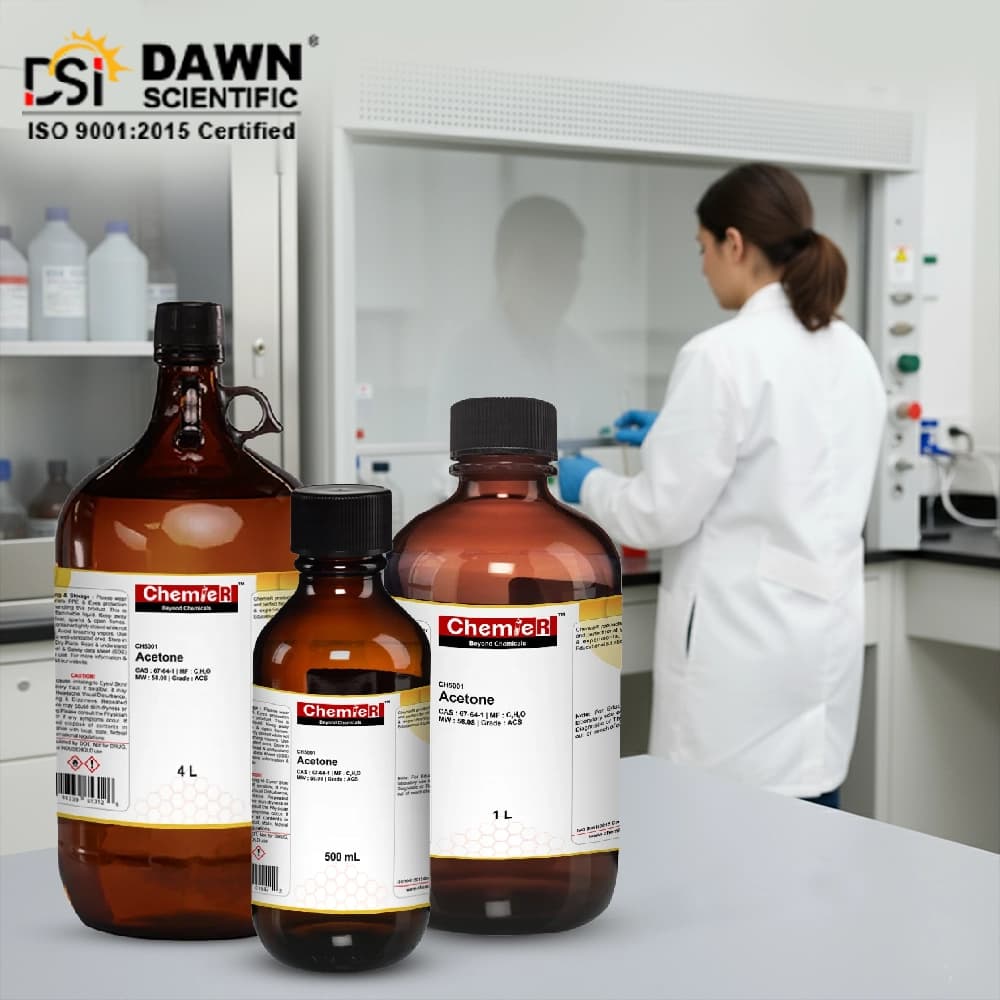
Acetone is among the most widely utilized solvents in laboratories because it is effective and has of rapid evaporation rate. Nonetheless, mishandling and storage may become very dangerous. Adequate acetone storage and acetone disposal are essential in ensuring the laboratory chemical safety and safety of personnel, equipment, and the environment.
This blog discusses best practices for acetone storage in laboratories, how to dispose of acetone safely in labs, and provides information on where to purchase quality acetone to use in the laboratory in the United States.
Acetone is very flammable and volatile. The improper storage may cause fire, reaction of chemicals with incompatible substances, and health risks to personnel in the laboratory. It is important to practice good chemical storage guidelines so that your laboratory can be safe and functional.
Examples of risks of improper storage of acetone are:
The following risks can be minimized by following the correct acetone storage procedures.
Storage of acetone is safe when preoccupied with containers, location, labeling, and ventilation:
Store acetone in containers that are non-reactive, like HDPE or glass bottles that are flammable liquid containers.
Store acetone in a flammable chemical-designated cabinet to minimize the chances of fire.
It is necessary to make sure that storage areas are well-ventilated to avoid vapors.
Store acetone separately with oxidizers, acids, and other incompatible materials.
Label containers with clear labels containing chemical name, hazard symbol, and date of receipt.
Acetone should be stored in a cool, dry place, not exposed to direct sunlight or sources of heat.
With the steps, the labs can adopt the best practices for acetone storage in laboratories as well as minimize hazards.
Proper handling is equally important for the safe handling of acetone:
These containments benefit laboratory chemical safety in general.
It is important to dispose of acetone correctly in order to avoid environmental degradation and have safe laboratories.
Never pour acetone into sinks or general waste.
Store hazardous waste of acetone in marked, closed containers.
Organize the disposal by using certified chemical waste disposal companies.
Lessen the waste of acetone used in reduced amounts and recycled where possible.
These steps will take care of how to dispose of acetone safely in labs and will ensure that staff and the environment are not harmed.
For reliable and high-quality acetone, laboratories in the U.S. can purchase from Dawn Scientific. Our lab-grade acetone is ideal for research, industrial, and educational applications, ensuring consistency, purity, and safety.
Buy acetone from Dawnscientific to maintain safe handling of acetone, proper storage, and a clean, compliant laboratory environment.
The proper acetone storage and acetone disposal are vital to the safety of chemicals in the laboratory and the reduction of hazards in any laboratory. Laboratories can maintain a safe working environment by adhering to best practices for acetone storage in laboratories as well as providing safe means of disposal of acetone.
Your laboratory acetone should be purchased from Dawnscientific so as to get the best in terms of quality, reliability, and safety for all your laboratory requirements.
Store acetone in well-capped HDPE or glass containers in cool and ventilated flammable-resistent cabinets, and away from incompatible compounds.
No. By all means, use the correct guidelines of how to dispose of acetone safely in labs with sealed hazardous waste containers.
Wear gloves, goggles, and a lab coat always, and use acetone in a fume hood or a well-ventilated place.
acetone is available at Dawnscientific, and we have high-quality acetone, lab-grade acetone may be purchased and used in research, industry, and education.
It minimizes the chances of fire, chemical reactions, health, and environmental contamination.
Disclaimer: All the information on this blog is published in good faith and for general information purposes only. The information contained in this blog might be provided on an “as is” based on Wikipedia, Google, and other scientific articles. We are not liable for any injuries or damages for the use of the information. Please do your research before you use this information for any purpose.