
On Friday, June 6, 2025
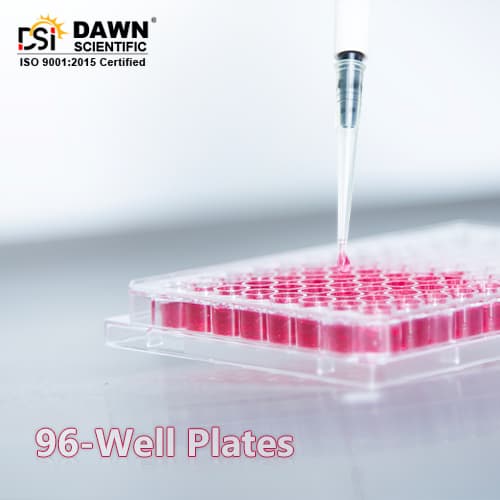
In the areas of biotechnology, biomedical research, and drug design, cell culture practices are of primary importance. There have certainly been significant advancements in the automation of cell culture processes, which can be attributed to the laboratory equipment developed, for example, 96-well plates—they are one of the most important breakthroughs in laboratory and automation systems.
This article focuses on the significance of 96-well plates in the advancement of cell culture optimization as well as their application in high-throughput research workflows.
A 96-well plate is a type of microplate that contains an 8×12 array of wells on its surface. It is designed for cell culture; therefore, the wells on it are used to grow cells on a miniature scale. The design of these plates allows researchers to run multiple experiments at the same time, which increases efficiency and conserves resources. Their widespread use stems from the possibility of standard automation systems to use them, largely contributing to modern laboratory workflows.
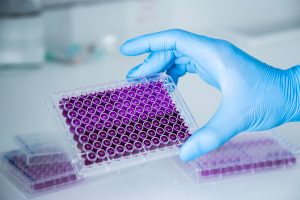
Perhaps the most striking feature of 96-well plates is the ability to perform parallel experiments. Hence, they are extremely valuable in drug screening and toxicity testing, where many conditions and levels are assessed at once.
Scientific research relies heavily on reproducibility, which hinges on consistency. In cell culture, attention to detail increases uniformity. For example, the shape and dimensionality of wells in 96-well plates assure uniform treatment of samples, which minimizes variability. This, in turn, improves reproducibility, which is an essential element in scientific experimentation.
Maintaining cells in cultures within 96-well microplates not only diminishes the volume of culture media and reagents used but is also economical. In addition, this contributes to environmentally-friendly lab policies grounded on reduced waste.
96-well plates have their own distinct set of advantages and, in conjunction with robots for imaging, reading plates, and pipetting, are vital in fast-paced labs and for other systems that demand HTS (high-throughput screening). All these systems have become critical in modern research.
The 96 well plate system has made it possible for researchers to perform high-throughput screenings (HTS)s which previously took too long and required too many resources because of their size. The miniaturization of 96-well plates greatly improves cell culture optimization during the initial phases of drug discovery.
Achieving optimized cell cultures requires the testing of numerous parameters such as temperature, pH, nutrient concentration, and oxygen levels. Systematic testing is possible with a 96-well plate while ensuring reproducible and controlled conditions.
Cell culture techniques combined with 96-well plate technologies nowadays yield data of much greater precision and reliability. The ability to image the 96-well plates improves detection of weaker signals and increases the ratio of signal to noise, providing clearer results.
Most suitable for drug efficacy and cytotoxicity testing.
Aids in the differentiation and expansion of pluripotent stem cells.
Enables scaffold-based cell cultures, 3D cellular models.
As with any other procedure, the choice of the type of 96-well plate to be used greatly impacts the cell culture conditions. The following factors should be considered:
Dawn Scientific is known to fulfill all aspects of cell culture applications including high-throughput screenings and routine cell culture optimizations. Our 96-well microplates make cell culture work as well as drive consistency and reliability needed throughout research.
Order now and receive unmatched services from Dawn Scientific.
The 96-well plate is one of the crucial advances in modern life sciences as it greatly enhances the productivity of cell culture work. Its role in high-throughput screening, automation, and uniformity of experimental conditions makes it essential in any laboratory. The drive towards research efficiency and accuracy in data collection is already leading to more frequent use of 96-well plates and will greatly enhance innovation and productivity in life science research.