
On
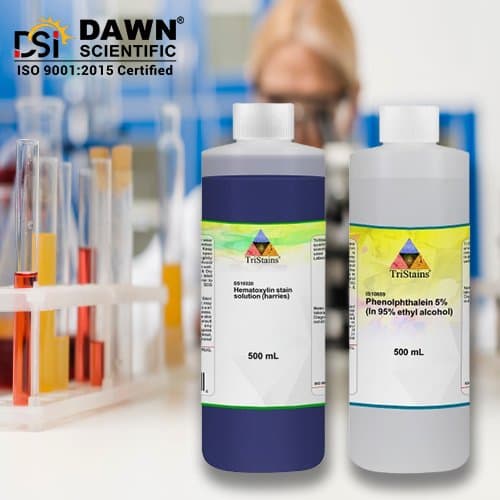
Modern laboratories could not effectively function without stains and indicators for accurate scientific analysis, research, and diagnostics. These laboratory reagents help highlight and quantify various substances in microbiology, histology, chemical testing, and even in industrial processes.
stains and indicators are necessary for accurate, reproducible, and reliable results. This makes them indispensable in modern scientific research. In this blog, we will discuss the role of stains and indicators, their types, applications and benefits, and, most notably, where to buy stains and indicators for laboratory.
stains and indicators used in modern laboratories are created so that they detect, select, and quantify specific components in a sample. Microbiology stains and indicators for cellular identification, and chemical indicators for pH, oxidation-reduction reactions, and chemical titrations.
To a significant degree, stains and indicators make scientific results more accurate which reduces the margins of errors in the data processed in laboratories.
Numerous stains and indicators exist, each of them fulfills a specific need in scientific research, clinical analysis, and industrial applications.
Bacterial identification, fungal detection, and cellular visualization in research and diagnostic work relies on microbiology stains and indicators.
Indicators for microscopy and analysis assist in revealing structures in tissues, blood, and other microbial samples.
Chemical indicators are used in acid-base titrations, quality control, and industrial testing processes.
Although many factors affect the work processes, the results of using stains and indicators of the highest grade always remain positive.
Order stains and indicators for modern laboratories from Dawn Scientific. We offer dependable products from the well-known brand TriStains for microbiology, histology, pharmaceuticals, chemicals, and other industries.
Fundamentally accurate scientific research, diagnosis, and analysis depend on advanced stains and indicators. Success in the laboratory depends on choosing the correct source for microbiology stains, chemical testing, and histology.
With just one click on our website Dawn Scientific, you can order stains and indicators and top-grade laboratory reagents, all at DawnScientific.com.
These ones are utilized in chemical analysis, microbiology, histology, and industrial testing. Indicators sign pH shifts, chemical changes, and the decisive points in the endpoint titration. Stains are good for observing cellular components, hence, their use in staining procedures.
stains and indicators ensure the accuracy, reliability, and reproducibility of results. Low purity reagents can cause inconsistent staining, false results, and inaccurate analysis which affect research and industrial processes.
stains and indicators relevance depends on their intended use (microbiology, histology, chemistry, industry), required sensitivity and specificity, compatibility with laboratory equipment, and reagent purity and stability.
For premium stains and indicators for modern laboratories, visit DawnScientific.com. Interested clients will also find high purity products for microbiology, histology, chemical analysis, and industrial applications.
Yes! Stains and indicators from Dawn Scientific keep standards and cleanliness needed for most laboratories and industrial-grade results in research, diagnostics, and quality control processes.