
On
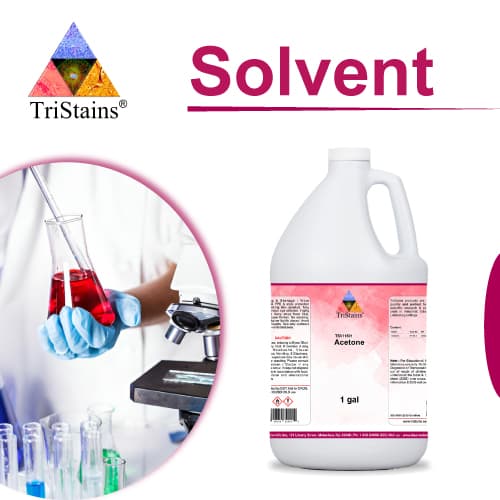
Solvents are essential substances that have the capability to dissolve a solute, leading to the formation of a solution. They are highly significant in different industries because of their capacity to dissolve, extract, or suspend other substances without altering them chemically. Stain solvents, on the other hand, are liquid agents utilized to dissolve and transport dyes or stains during microbiological and histological staining processes. These solvents aid in the penetration of stains into biological tissues, cells, or microorganisms, enabling the observation of specific structures through a microscope.
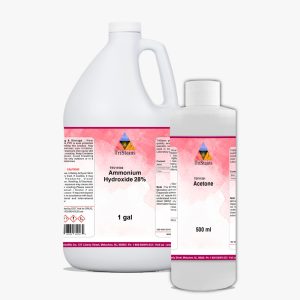
TriStains Solvents are essential tools in microbiology laboratories, aiding in the processing, culturing, and examination of microorganisms. Specifically designed for microbiology and histology applications, our diverse range of solvents includes Acetone, Methanol, Isopropyl Alcohol, Propylene glycol, Reagent alcohol, and more. These high-quality solvents play crucial roles in sterilization, preservation, extraction, and purification of biological samples. They are indispensable for ensuring proper preparation, preservation, and analysis of microbial specimens, as well as for effective staining of biological samples to enable detailed examination of cellular and microbial structures. Our solvents provide precise, consistent, and reliable results in microbiological and histological procedures, and are available in various pack sizes at competitive prices.
TriStains Solvents play a crucial role in various scientific disciplines by enabling researchers and healthcare professionals to visualize, analyze, and study biological samples effectively. These solvents are particularly significant in disciplines such as Microbiology, Histology, Cytology, and Hematology as follows:
Microbiology:Solvents, such as ethanol and isopropanol, are commonly utilized in microbiology laboratories for sterilizing surfaces and equipment. They are also employed to fix microbial samples, maintaining their structure for microscopic examination. Additionally, acetone and ethanol are utilized in dehydrating microbial samples before embedding them in paraffin for sectioning. These solvents aid in dissolving and preparing stains and dyes for various microbiological staining techniques, such as Gram staining and acid-fast staining. Moreover, methanol is used to extract lipids from microbial cells for analysis, while organic solvents play a crucial role in purifying proteins through precipitation or solvent extraction methods.
Histology:Ethanol and isopropanol are commonly used solvents for tissue preservation and preparation, while xylene is used to clear tissue samples before embedding in paraffin. These solvents also play a crucial role in dissolving dyes and stains for tissue section staining, such as Hematoxylin and Eosin staining. They are essential for differentiation and decolorization, as well as in creating mounting media for preserving stained tissue sections.
Hematology:Solvents such as methanol are frequently utilized to preserve cell morphology for microscopic analysis by fixing blood smears on slides. Methanol or ethanol is employed in the preparation of the Leishman stain, which aids in the differential counting of blood cells. Additionally, solvents are used to dissolve the stains utilized in the Wright-Giemsa stain, a standard technique for staining blood smears. Solvents are also utilized in the preparation of diluting fluids that assist in the manual counting of blood cells using hemocytometers.
Cytology:Solvents like ethanol, methanol, and acetone are used to fix cellular samples from various body fluids for cytological assessment. Ethanol is specifically used in fixing Pap smears to maintain cell structures for microscopic evaluation. These solvents are crucial in preparing solutions for the Pap stain, necessary for analyzing cellular morphology and identifying abnormalities. Similar to hematology, solvents dissolve stains for cytological preparations. They also help dehydrate samples before clearing with xylene, preparing them for mounting and microscopic examination. Solvents are key in creating mounting media to preserve and clearly visualize stained cytological samples under a microscope.
To achieve the desired results in Histology, any histologist requires authentic reagents, solvents, stains, etc. One should choose quality products from reputed brands like “TriStains”, which give reproducible results. TriStains brand meets the highest quality standards & provides excellent color performance of desired components of cells and tissue in life science laboratories. “TriStains” offers a range of stains used in Histology, Cytology, Microbiology & Hematology laboratories. TriStains was founded with the vision of providing researchers and medical professionals with the best products available in the market. Buy authentic reagents with ISO 9001:2015 quality assurance from www.dawnscientific.com.
Disclaimer: All the information on this blog is published in good faith and for general information purposes only. The information contained in this blog might be provided on an “as is” basis based on Wikipedia, Google, and other scientific articles. We are not liable for any injuries or damages for the use of your information. Please do your own research before using this information for any purpose.