
On Friday, June 26, 2026
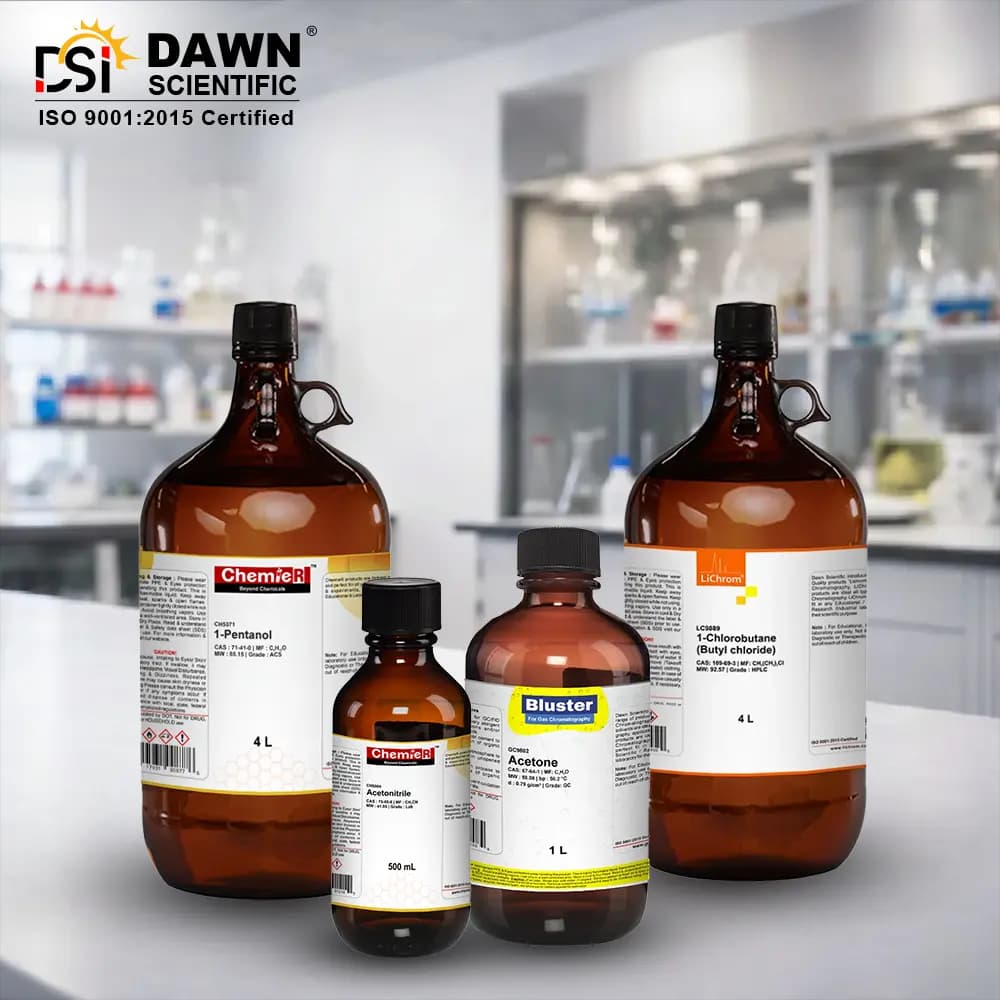
In every laboratory, high purity solvent plays a major role in ensuring accurate experiments, reliable results, and safe chemical processes. Regardless of your field of research, pharmaceuticals, food testing, environmental analysis, or industrial manufacturing, a high-purity solvent is necessary.
Most individuals are very keen on chemicals, instruments, and laboratory processes, yet consistently fail to recognize the quality of the solvents used. Any slight contamination of a solvent can affect the results of an experiment, lower reaction efficiency, destroy lab equipment, and cause inaccurate data.
That is why the role of high-purity solvents cannot be overlooked in current chemistry.
High-purity solvents refer to the absence of unwanted contaminants, impurities, moisture, particles, and other chemicals in a solvent. A solvent of high purification level is a solvent that has a desired chemical composition and minimal amounts of impurities.
Common impurities found in solvents may include water or moisture, dust, particulate matter, organic residues, and metal ions. Such impurities can be small, but they can make a big impact on chemical reactions, testing of analyses and lab performance.
When dealing with sensitive analytical methods and specific chemical reactions, the purity of the solvents becomes important. High-purity solvents are crucial in laboratories because they help scientists achieve consistent, repeatable, and accurate results.
When the solvents is impure, it can:
That is why it is so important for solvents to be pure in any lab, especially in fields where accuracy is very important.
The success of a chemical reaction is directly dependent on the purity of the solvent used. Solvents are commonly used to dissolve reactants, regulate reaction temperature, and furnish the appropriate environment in which a reaction can take place.
However, if impurities are present, they can interfere with reactants and catalysts. In others, even low levels of contamination may halt a reaction altogether or form undesired by-products.
For example, water contamination in moisture-sensitive reactions can lead to:
This shows how solvent impurities affect chemical reactions and why laboratories must use high purity solvents to maintain reaction quality.
Among the largest issues in the laboratories is the impact of solvent impurities on the yield and accuracy of the reaction. Reaction can seem to be successful, but impurities can reduce the ultimate yield or give invalid readings.
For example:
In pharmaceutical, food, and environmental testing laboratories, erroneous findings may result in product failures, wastage of materials, and regulatory problems.
The importance of pure solvents in the laboratory is particularly significant when there is an advanced analysis tool such as HPLC, GC, LC-MS, UV spectroscopy, and ICP-MS.
These instruments are designed to detect even the smallest amounts of chemicals. In case the solvent has impurities, the instrument can pick up the impurities rather than the sample.
Laboratories benefit by using high-purity solvents:
This is among the largest advantages of the application of analytical-grade high-purity solvents in the laboratories.
Pure Analytical Grade High Purity Solvents are produced to achieve high purity standards. Their application is usually in testing laboratories, research centers, and pharmaceutical sectors due to their reliability in performance.
Analytical grade solvents have some significant advantages in laboratories, which include:
Investing in good-quality solvents is an intelligent choice when it comes to laboratories, which conduct sensitive chemical tests.
Pharmaceutical analysis solvents of high purity are essential since pharmaceutical testing must be of high quality.
In pharmaceutical labs, solvents are used in:
Even small impurities can affect the purity, safety, and effectiveness of pharmaceutical products. This is why pharmaceutical laboratories prefer HPLC grade, ACS grade, and Analytical Grade High Purity Solvents.
The right solvent grade will depend on:
Laboratories should always choose the best purity grade when critical applications are to be done.
Proper solvent storage and handling are just as important as buying high quality solvents. Even the purest solvent will be contaminated when it is not kept properly.
To keep solvents pure:
Proper storage and handling of solvents can maintain the quality of solvents and minimize the chances of contamination.
In case you are in need of knowing where to buy High-Purity Solvents, you should consider a reliable supplier that comes with certified laboratory-grade solvents and chemicals.
A good supplier must offer:
Dawn Scientific provides this high-purity solvent to laboratories at good pricing without compromising on the product. The product catalogue can be used to check the updated pricing and availability of the product. Dawn Scientific is a trustworthy chemical supplier, supplying fast and secure delivery.
One of the most significant considerations of successful chemical experiments, proper analysis, and reliable lab results is solvent purity. High-purity solvents selection can directly affect the quality of the reaction, the yield of products, and the performance of the instruments, whether located in a research laboratory or a pharmaceutical company.
Laboratories can make improved decisions by understanding solvent purity, the importance of high-purity solvents, and the impacts of solvent impurities in chemical reactions.
Laboratories can enhance work efficiency and accuracy by selecting the appropriate grade of solvents, adhering to best solvent storage and handling procedures, and investing in Analytical Grade High Purity Solvents.
Disclaimer: The content on this blog is provided in good faith and is intended for general informational purposes. The information contained in this blog might be provided on an “as is” basis, based on Wikipedia, Google, and other scientific articles. We are not liable for any injuries or damages for the use of the information. Please do your research before you use this information for any purpose.